What is WellVetMind?
WellVetMind is specialist counselling built specifically for vets, delivered as part of a practice’s employee benefits.
It was founded by me, Christian Bamber, a vet of over 26 years experience and a qualified counsellor, to close a gap I’ve lived and worked through myself – the absence of mental health support that actually understands the profession it’s meant to serve.
I take mental health seriously, in and out of the workplace – professional quality of life shapes everything else. Poor mental health can be devastating for individuals, families, colleagues and businesses alike, and most of us know someone who’s been seriously affected.
We may not be able to change our daily exposure to moral distress, empathy fatigue, burnout, vicarious trauma and the weight of euthanasia – these come with the job. But WellVetMind doesn’t treat them as generic “stress.” They’re the specific, recurring realities of veterinary work, and they deserve support built to match.
WellVetMind gives vets the space and time to talk it through. Practices sign up, their vets get confidential access, and the support that reaches them speaks their language from the first session.
Scale of the Mental Health Crisis
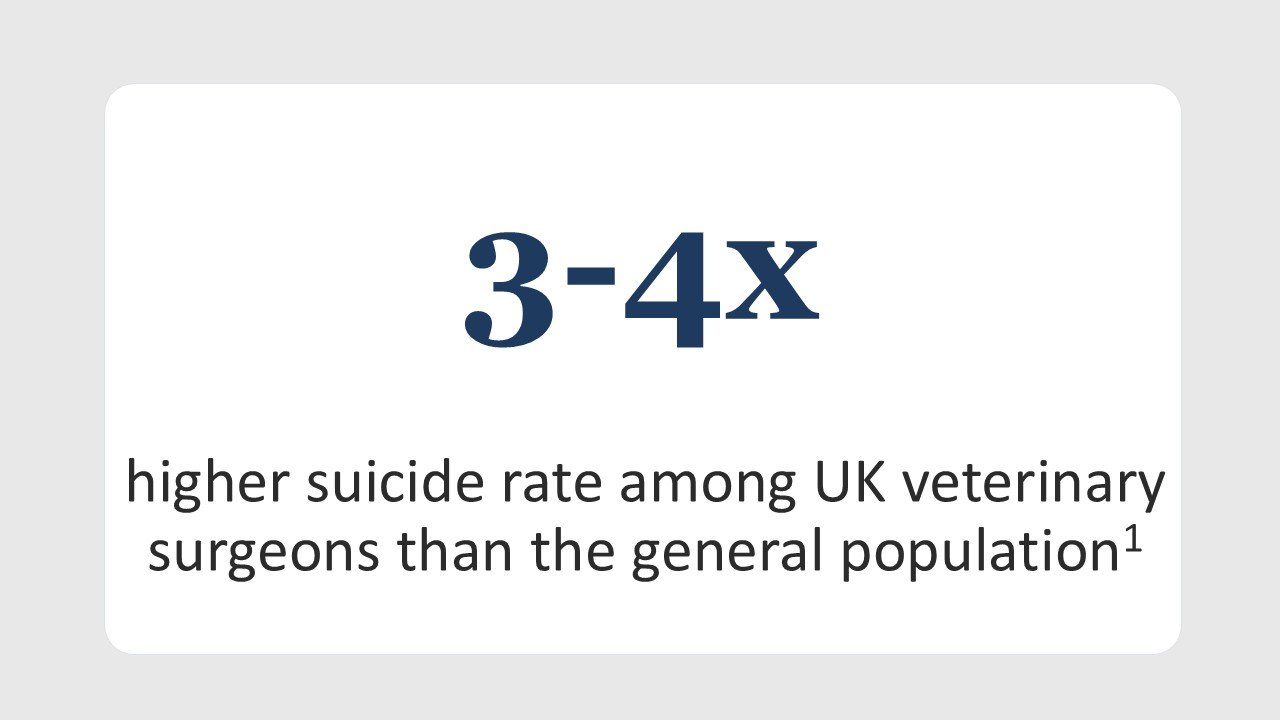
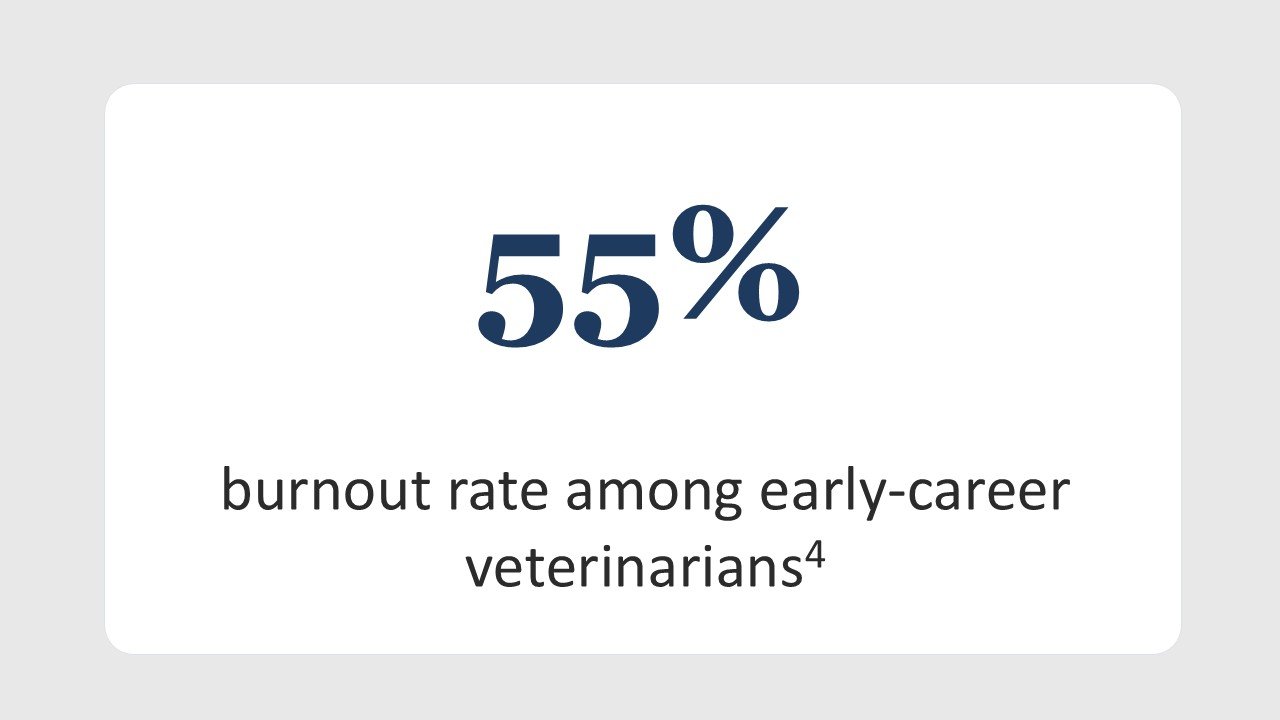
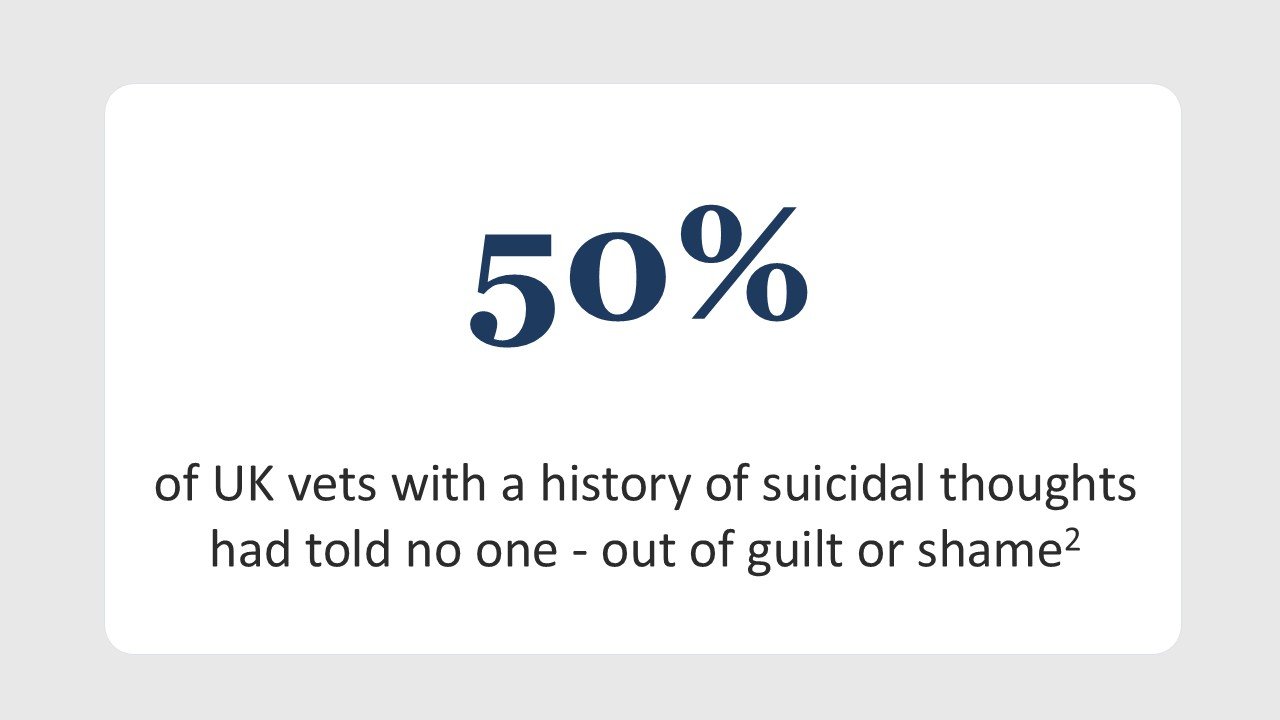
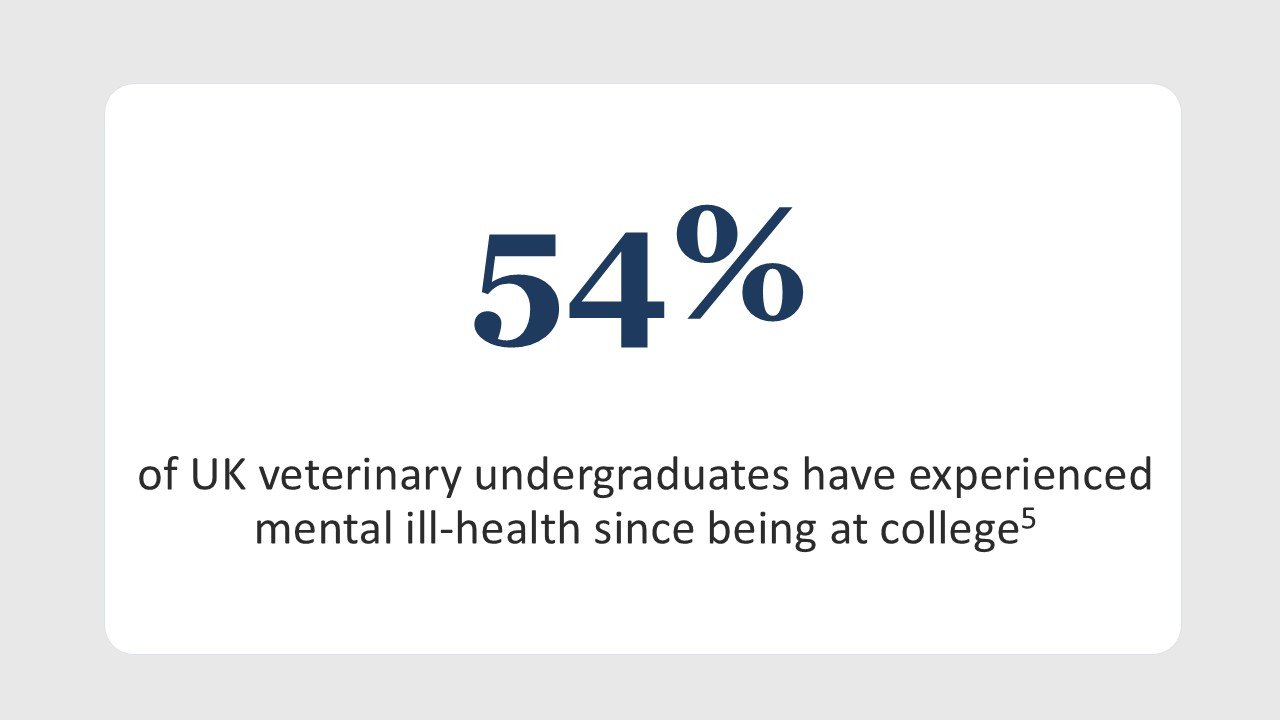
Unless we’ve been burying out heads in the sand, we should all be aware that the veterinary profession in the UK is facing a mental health crisis that is not only well evidenced, but worsening and significantly under-resourced by specialist provision.
Generic EAPs weren’t built for a profession where moral distress, empathy fatigue, burnout and euthanasia aren’t the exception – they’re the job. WellVetMind provides specialist counselling for vets, as part of the job.
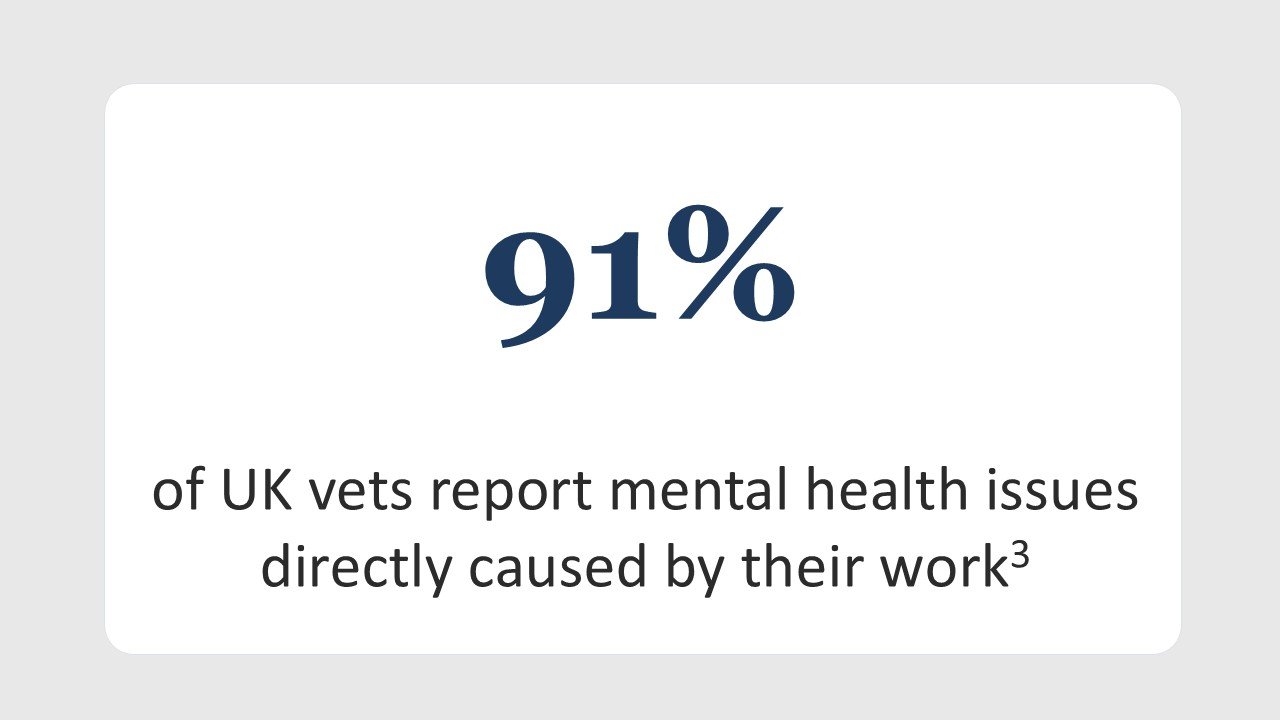
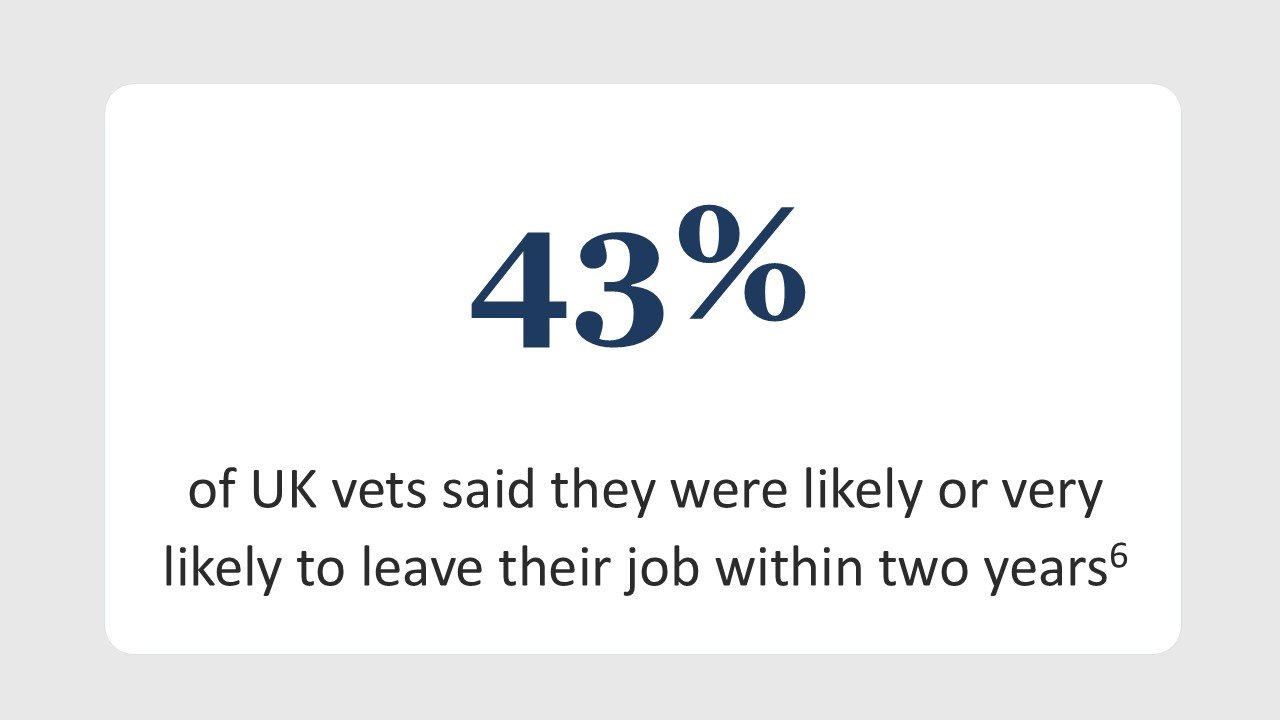
1.Platt B, Hawton K, Simkin S, Mellanby RJ. Systematic review of the prevalence of suicide in veterinary surgeons. Occup Med (Lond). 2010 Sep;60(6):436-46. doi: 10.1093/occmed/kqq044. Epub 2010 Jun 30. PMID: 20591857
2.Platt B, Hawton K, Simkin S, Dean R, Mellanby RJ. Suicidality in the veterinary profession: interview study of veterinarians with a history of suicidal ideation or behavior. Crisis. 2012;33(5):280-9. doi: 10.1027/0227-5910/a000143. PMID: 22713972.
3.Transforming Veterinary Practice for the 21st Century Building a thriving workforce to meet evolving client expectations and support workplace wellbeing. (2025). [online] Available at: https://www2.zoetis.co.uk/content/_assets/ZOETIS_White-paper_Transforming-Veterinary-Practice-for-the-21st-Century.pdf [Accessed 28 July 2026].
4.Hatch PH, Winefield HR, Christie BA et al. Workplace stress, mental health, and burnout of veterinarians in Australia. Aust Vet J 2011;89:460–468. 10.1111/j.1751-0813.2011.00833.x.
5.Cardwell, J.M., Lewis, E.G., Smith, K.C., Holt, E.R., Baillie, S., Allister, R. and Adams, V.J. (2013), A cross-sectional study of mental health in UK veterinary undergraduates. Veterinary Record, 173: 266-266. https://doi.org/10.1136/vr.101390
6.Hagen JR, Weller R, Mair TS et al. Investigation of factors affecting recruitment and retention in the UK veterinary profession. Vet Rec 2020;2020(187):354. 10.1136/vr.106044.
7.Neill CL, Hansen CR and Salois M (2022) The Economic Cost of Burnout in Veterinary Medicine. Front. Vet. Sci. 9:814104. doi: 10.3389/fvets.2022.814104
8.Practices urged to do more to improve vet retention. (2026). [online] Vettimes.com. Available at: https://www.vettimes.com/news/business/practice-developments/pivotal-moment-to-tackle-retention-crisis-vets-told [Accessed 28 July 2026].
Look at the Costs
The human cost comes first, because it should. Vets take their own lives at a significantly higher rate than the general population – a fact the profession has known for over a decade and has still not fixed.
Behind that headline sits a slower, quieter toll: moral distress, burnout, empathy fatigue and vicarious trauma that vets carry home and rarely name, let alone treat.
But this isn’t only a welfare issue – it’s a business one too. When a vet leaves, it costs a UK practice an estimated £20,000–£40,000 in locum cover, recruitment, and lost clients. And work-related mental ill-health is among the most commonly cited reasons vets leave their jobs. This is the very challenge WellVetMind exists to alleviate – to improve individual’s professional quality of life and keep vets in their jobs.
Practices that lose good vets to burnout aren’t just losing people. They’re losing the client relationships and continuity of care that a healthy practice depends on. In fact, burnout of veterinarians in the US industry has been calculated between $1 and $2 billion annually in lost revenue.

How WellVetMind Works
WellVetMind is offered to practices as an employee benefit.
Once a practice signs up, every vet on the team gets confidential access; no referral needed, no line manager involved, no explanation required.
Vets get 8 sessions a year as standard, with additional sessions available for practices who want deeper cover. Sessions are booked directly and taken whenever they’re needed – after a bad run of euthanasias, dealing with a client complaint, or just when things have been building for a while. There’s no threshold to meet and no case to make. If a vet wants a session, they take one.
Every WellVetMind associate works to the same standard: lived or trained specifically in the realities of veterinary practice, so the first session doesn’t start with explaining the job. That’s the difference between counselling and WellVetMind counselling – we actually understand what you do.
For a fraction of the cost of losing a single vet, every vet gets specialist support built for them, and practices get a mentally healthier and sustainable team.
Why Choose WellVetMind?
We’re the only specialist veterinary sector counselling service – built by a vet, for vets, not adapted from a generic EAP template. We have lived the the realities of practice life, so your team gets support that understands the job from the very first session.
8 confidential counselling sessions per vet per year
Clinically paced and structured for maximum benefit delivered by specialist veterinary sector counsellors
Sessions held online at a convenient time for your vets
Vets rarely do “normal” office hours so we aim to offer sessions daytime, evenings and weekends.
Sessions contribute towards CPD
Confirmed directly with RCVS: any aspect of a session can be logged as CPD where it relates in any way to professional practice (self-determined, at the individual vet’s discretion, and recorded via 1CPD).
Ready to work together?
Losing a vet can cost more than your bottom line. A conversation with WellVetMind costs nothing. Get in touch today.
Explore Our Blog
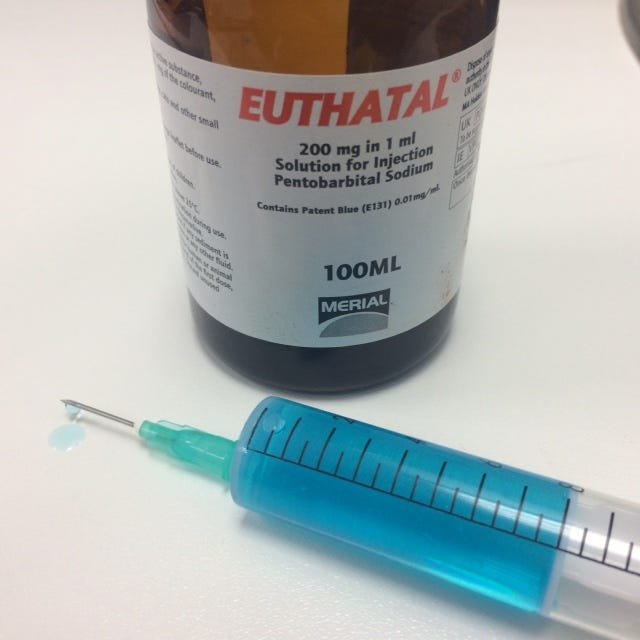
When Death Becomes (Too) Familiar: Euthanasia, acquired capability and the psychology of professional exposure to death
Introduction Most people are protected from suicide by a[…]

The Weight of the Needle
How repeated euthanasia affects the mental health of veterinary[…]

The Empathy Paradox: Why Your Team’s Greatest Strength May Also Be Its Greatest Vulnerability
I think it’s safe to say that most of[…]